Skip to content

Chilosophy

A studio for founders who know what they want built,but not yet how to build it.

We turn vision and domain knowledge into technical direction and shipped products — architecture, full-stack, web and mobile.

Taipei.

Who this is for

A good fit if

  • You have a product idea and domain expertise, but no technical team yet
  • You need someone to decide what to build, not just build what you specify
  • You're working on something without an obvious pattern to copy
  • You'd rather have one senior person accountable than a team to manage

Probably not a fit if

  • You have a spec and need hands to execute it
  • You need a large team scaled up quickly
  • You want the cheapest possible build

What we do

Build it from zero
An idea and domain expertise, taken to a launched product. Deciding what goes in the first version, designing the architecture, building it.
Technical direction
Turning what you know about your domain into technical decisions you can act on: what to build, in what order, on what foundation, and what to leave out.
Make an existing codebase workable again
Restructuring an MVP that's become slow to change into something your team can build on.

Selected work

Ed-tech · New York

Writing Process Visibility for Teachers

Teachers had no reliable way to tell how a student's work was actually written. AI detection scores guess, and guessing wrong has real consequences for a student.

Revision History replays a document from first keystroke to final draft, so the process is visible instead of inferred.

Two products, built from zero on a three-person team. Slide replay extends that visibility from Google Docs to Google Slides. Byline lets students use AI openly while giving teachers visibility into how — rather than trying to keep AI out of student writing altogether. Both run on architecture and data pipelines built from reverse-engineered, undocumented structures.

Used by 200,000+ teachers.

ESG · Taipei

Carbon Accounting, Turned Into a Product

Greeni had deep domain knowledge in carbon accounting and a codebase the team was fighting rather than building on. Every change was slow, and validating a product idea took longer than having it.

We turned the team's ESG domain knowledge into product logic and technical structure, then rebuilt the frontend around reusable patterns and a clearer architecture.

The team can now ship and test a product change in the time it used to take to plan one.

Travel · San Francisco

AI Travel Booking Agent

Booking a trip means filters, tabs, and comparison. Voy replaces that with a conversation: say what you want, and the agent finds and books it.

We built the mobile app end to end — conversational UI, backend, and agent integrations — on a React Native and Next.js monorepo with a custom design system.

Agriculture · Netherlands

Automated Price-List Processing

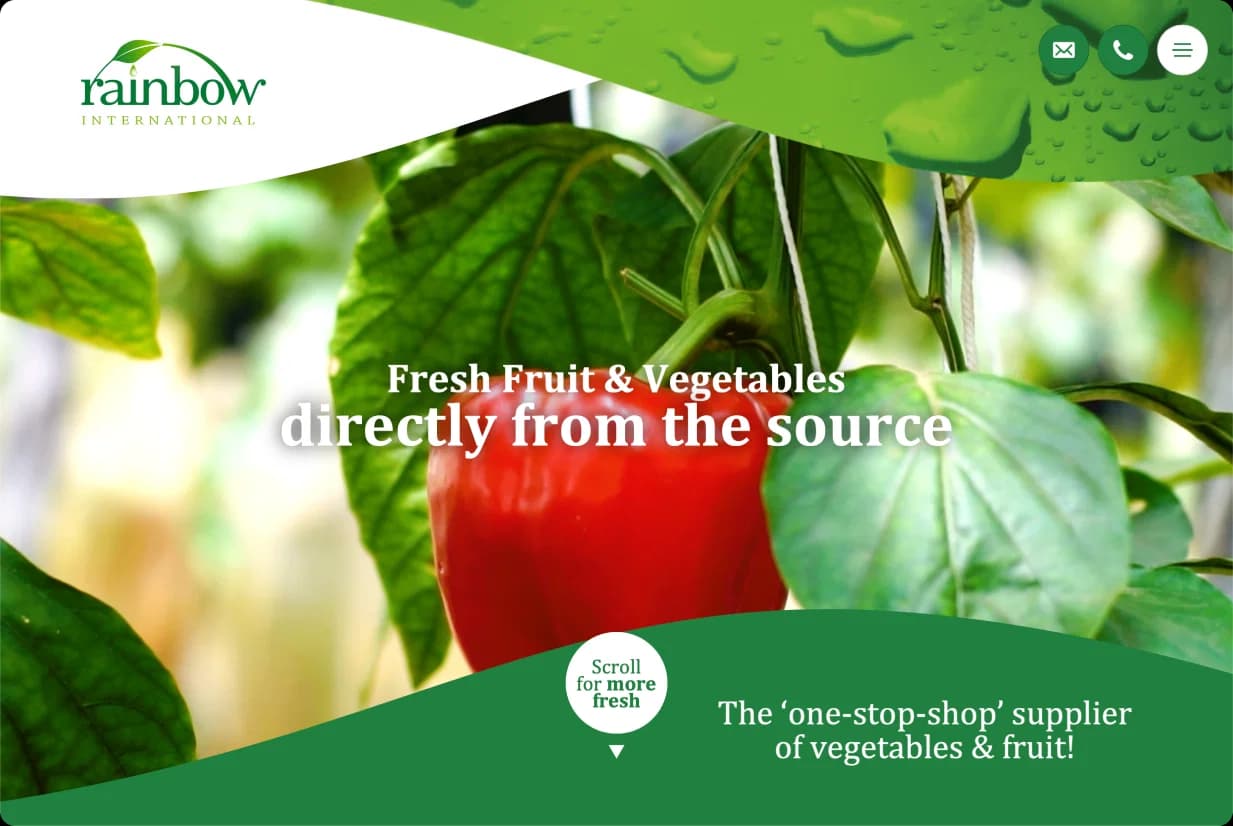
A leading European vegetable trading company received daily supplier price lists as PDFs, emails, and images — no two formats alike. Every one was typed in by hand.

An OCR pipeline now parses incoming price lists whatever form they arrive in, extracts the commercial data, and structures it for direct use in the business. Manual entry is gone from daily operations.

Hospitality · Japan

Contactless Guest & Operations App

Hokkaido Track, a luxury ski resort, needed to maintain high-touch service during a period when guests were avoiding direct contact with staff.

We turned the hotel's operation manuals into digital workflows, streamlining guest requests and staff coordination — system architecture, UX and UI, and an interactive prototype for both the guest and operator apps.

Food & Beverage · Taiwan

E-Commerce for a Heritage Brand

Taiwan-New Beef Noodle had traded on in-person dining for over forty years. Lockdown removed that overnight.

We built an e-commerce platform for ready-to-cook products with inventory, logistics, and payment integrated. It kept the restaurant trading through lockdown and reached customers it hadn't had before.

Our own products

Three products we built and ran ourselves. Looking back, they're all versions of the same question: how do you help someone see themselves clearly? Emotions in one, personality in another, how you want to be seen at work in the third.

They're also where the approach to client work came from. Owning the outcome rather than just the code is what teaches you which technical decisions are worth their cost — including the expensive ones we got wrong.

Emotion Visualization, Made Tangible

Consumer · 2024–2025

CEO

Understanding your own emotions is hard to do in the abstract. Journals and meditation apps ask you to reflect; almost nothing makes an emotional state something you can see change over time.

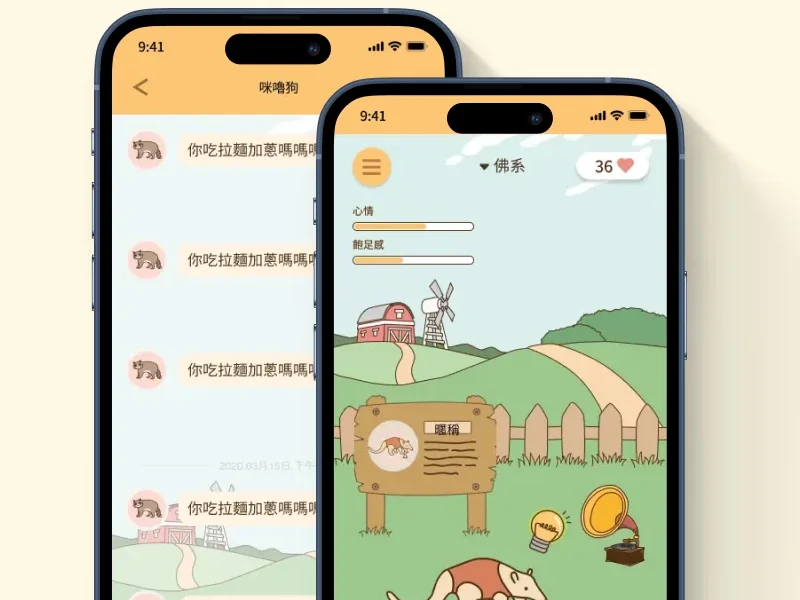
Emocean visualizes emotions through a gamified fish-raising system, built around meditation and self-reflection. A two-person team took the MVP from nothing to launched in three weeks, then shipped updates every four days against real user feedback.

Emocean app screens showing the gamified emotion visualization

Job Matching on Culture, Not Keywords

Marketplace · 2021–2024

CTO

Hiring platforms match on résumés and keywords, which tells you what someone did but nothing about whether they'd fit.

Gigwok matched candidates and businesses on cultural fit and personality, letting people present themselves through images and video instead of bullet points. A two-person dev team built the full platform — candidate matching, in-app payments, real-time messaging, and social features — and grew it to nearly 1,000 users.

Gigwok platform screens showing culture-fit job matching

Low-Pressure Dating Through Virtual Pets

Consumer · 2019–2020

COO

Dating apps front-load appearance and put the pressure of a first message on strangers with nothing in common yet.

AInimal matched people on personality and gave them a shared virtual pet to raise, turning the opening conversation into something to do together rather than something to perform. A cross-functional team of ten across marketing, design, and engineering grew the app past 2,000 users, raised USD $30K, and won several startup awards.

AInimal app screens showing the virtual pet dating experience

Where Chilosophy came from

Charles Chen, founder of Chilosophy

Chilosophy was founded by Charles Chen, who co-founded two startups and led a third, taking each from idea to market. That meant living with his own technical decisions, including the expensive ones — which is a different education from being handed a spec.

Seven years building complex applications since. Full-stack across web and mobile, mostly TypeScript, with architecture as the strongest part. Products now serving more than 200,000 users. Work with teams across the U.S., Europe, and Asia, spanning design, marketing, and engineering.

That experience is what the studio is built on, and it's why engagements run the way they do: ask what the business actually needs before scoping anything, say what's worth building now and what can wait, explain trade-offs in terms a founder can take to their own board. Those aren't personal habits — they're how every project here runs, and they're the part that doesn't depend on who's holding the keyboard.

Outside the work

Photography, Solo travel, Cooking, Meditation, Journaling, Reading, Running, Coaching

Working on something?

hi@chilosophy.studio